
How to organize your fridge so food lasts longer
Updated · 5 min read
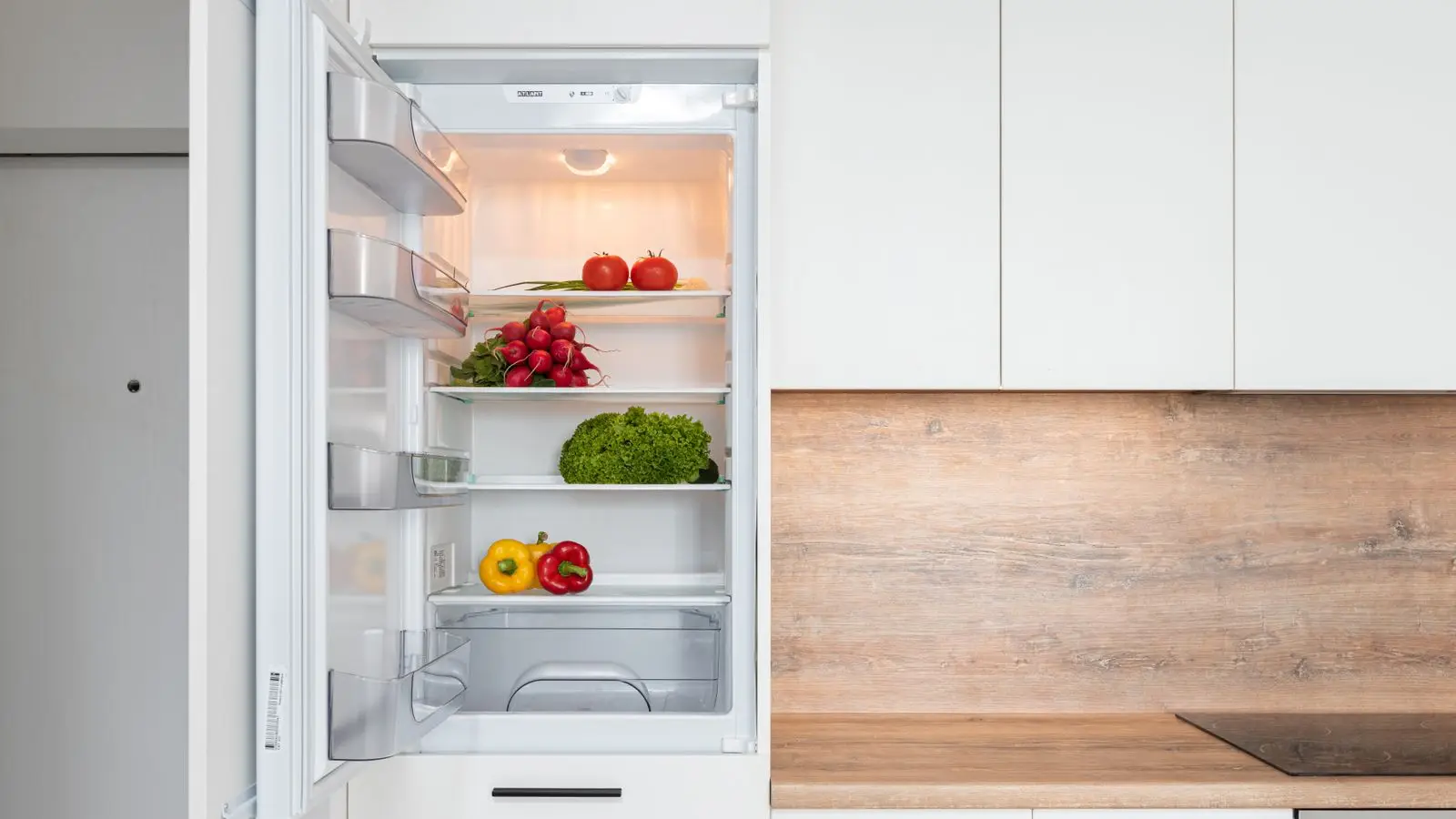
A fridge isn't the same temperature everywhere. Putting things where they belong keeps food fresh longer, stops raw meat from dripping onto anything, and makes it obvious what needs eating. Here's a layout that works in almost any fridge.
First, check the temperature
Keep the fridge at 40°F (4°C) or colder and the freezer at 0°F (-18°C). Many fridge dials are just numbers, so a cheap appliance thermometer on the middle shelf is the only way to know.
Shelf by shelf
- Door - the warmest spot. Condiments, dressings, juice, butter. Not milk or eggs, even though many doors have an egg tray.
- Top shelves - steady and ready to eat. Leftovers, drinks, yogurt, deli food, and anything that doesn't need cooking.
- Lower shelves - the coldest. Milk, eggs in their carton, and cheese.
- Bottom shelf - raw meat, poultry and fish. On a plate or in a container, so any drips can't reach food that won't be cooked.
- Crisper drawers - produce. See below for the humidity settings.
What the crisper settings mean
- High humidity (vent closed): things that wilt - leafy greens, herbs, broccoli, carrots, cucumbers.
- Low humidity (vent open): things that rot - apples, pears, grapes, stone fruit. Apples and pears also give off a gas that ripens their neighbors, so they're best kept apart from vegetables.
Some things last better outside the fridge altogether: tomatoes, potatoes, onions, garlic, bananas and bread. Keep potatoes and onions apart; together they spoil faster.
Habits that keep it working
- Make an "eat first" spot - one bin or the front of a shelf for leftovers and anything close to its date.
- Don't overpack. Cold air needs to move around the food.
- Put new groceries behind the old. First in, first out.
- Store leftovers in clear containers, labeled with the date, and use them within 3–4 days.
- Wipe up spills right away, and do a quick clear-out before each big shop.
More guides
- How long food lasts in the fridge and freezerA quick chart of how long meat, fish, leftovers, eggs and dairy keep in the fridge and freezer, based on USDA guidance, plus the rules that keep it safe.
- How to cut food waste at homeWhere household food waste really comes from, ten habits that cut it, and a simple way to track what you throw out so you can see it shrink.
- How to organize a deep freezerZones, labels and a simple list that keep a chest or upright freezer usable - plus how long frozen food keeps its quality.